When Connected Buildings Sound the Alarm
IoT security does not end with the alarm. It begins with the right response. Connected buildings and intelligent sensors detect risks in real time. True security, however, is only achieved when alarms are professionally assessed, prioritized, and the appropriate measures are initiated without delay.
Sensors detect risks – but who responds?
It is the middle of the night. In a production facility, a gate is opened. A sensor registers unusual movement. At the same time, a machine reports a malfunction that could disrupt operations.
The technology works as intended: the event is detected and automatically reported. But now the crucial question arises: Who responds to the alert – and immediately knows what to do?
This is precisely where it becomes clear that modern security goes far beyond sensors and intelligent systems.

Connected Buildings Provide Real-Time Information
Today, buildings, production facilities, and technical infrastructures are increasingly interconnected. Access control systems, fire alarms, video surveillance, and technical sensors continuously monitor the status of facilities and buildings.
As soon as something unusual occurs, an alarm is triggered automatically. This allows risks to be detected early – long before major damage occurs.
Yet, as intelligent as these systems may be: they provide information, but they do not make decisions.
When Technology Reports and Humans Decide
Every alarm notification must be evaluated. Is it an actual incident or a false alarm? Does a designated person need to be notified? Is intervention required?
For companies, it is nearly impossible to monitor such events around the clock themselves. Many incidents occur outside regular business hours – at night, on weekends, or during public holidays.
That is why modern security and building systems are frequently connected directly to a professional alarm monitoring center.

From Alarm to Intervention
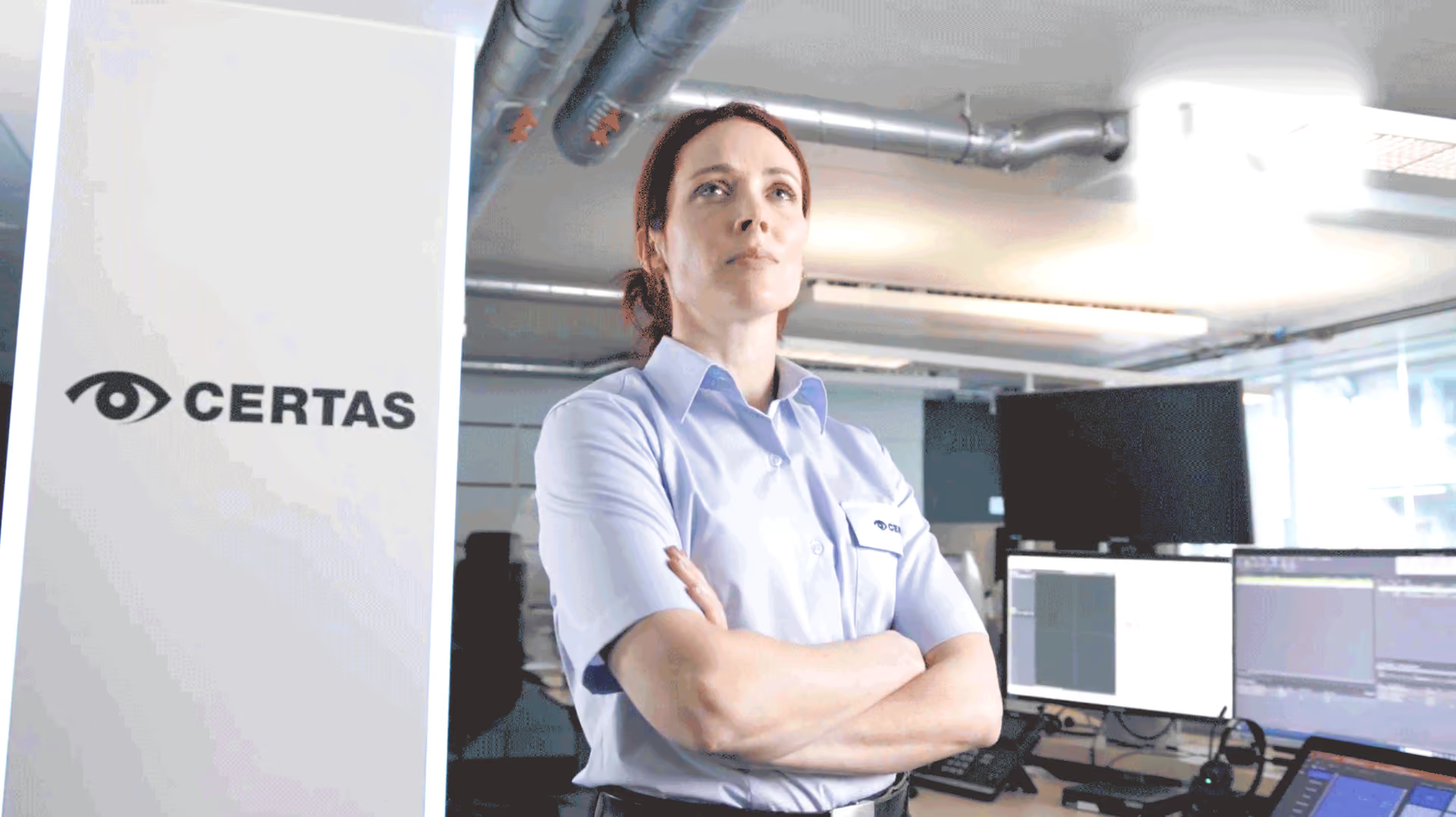
At the monitoring center, incoming alerts are handled around the clock by trained specialists. They verify the alarm against defined processes and pre-established action plans. If an actual incident is suspected, the designated response measures are initiated immediately.
The key advantage lies not only in speed, but above all in clear organization. Every notification follows a structured process – from alarm receipt and verification to response deployment.
For businesses, this ultimately means security, peace of mind, and the assurance that someone is taking responsibility in an emergency at all times.
IoT Security Requires More Than Technology
With the growing digitalization of buildings and technical systems, the importance of a professional alarm organization continues to rise. Sensors and connected systems provide the necessary data. However, true security is only achieved through proper evaluation and an appropriate response.
Technology can detect risks. Security is created where humans take responsibility and act at the right moment.
Certas Supports Businesses 24/7
As Switzerland’s alarm monitoring and control center, Certas monitors security, building, and IoT systems around the clock. Incoming notifications are checked, evaluated, and, if necessary, defined intervention teams are dispatched.
In this way, we ensure that an alarm leads to the right action: quickly, professionally, and reliably.